The Best Places to Eat in Cambridge: Where to Eat in Cambridge, Area by Area
Cambridge is about two miles across. That single fact shapes everything about eating here: there is no restaurant district, no quarter you can set aside an evening for, and no meaningful distinction between going out for dinner and walking somewhere. The places to eat in Cambridge are threaded through a working city, and the useful way to think about where to eat in Cambridge is geographic.
- 1 Fitzbillies
- 2 The Eagle
- 3 Fin Boys
- 4 Vanderlyle
- 5 Fancett's
- 6 Scott's All Day
- 7 The Station Tavern
- 8 The Punter
- 9 The Orchard Tea Garden
- 10 The Red Lion
Where to eat in Cambridge, area by area
Five parts of the city behave differently, and knowing which one you are standing in tells you more than any ranked list could. The centre, Mill Road, the two station areas, the north around Castle Hill and Chesterton, and the river corridor out towards Grantchester.
The centre and Market Square
The historic core is the smallest of the five and the most heavily trafficked. Market Square has held a market since the Middle Ages and still trades seven days a week, with food stalls along one edge. It is the single most reliable place to eat in the city centre during the day, and the cheapest.
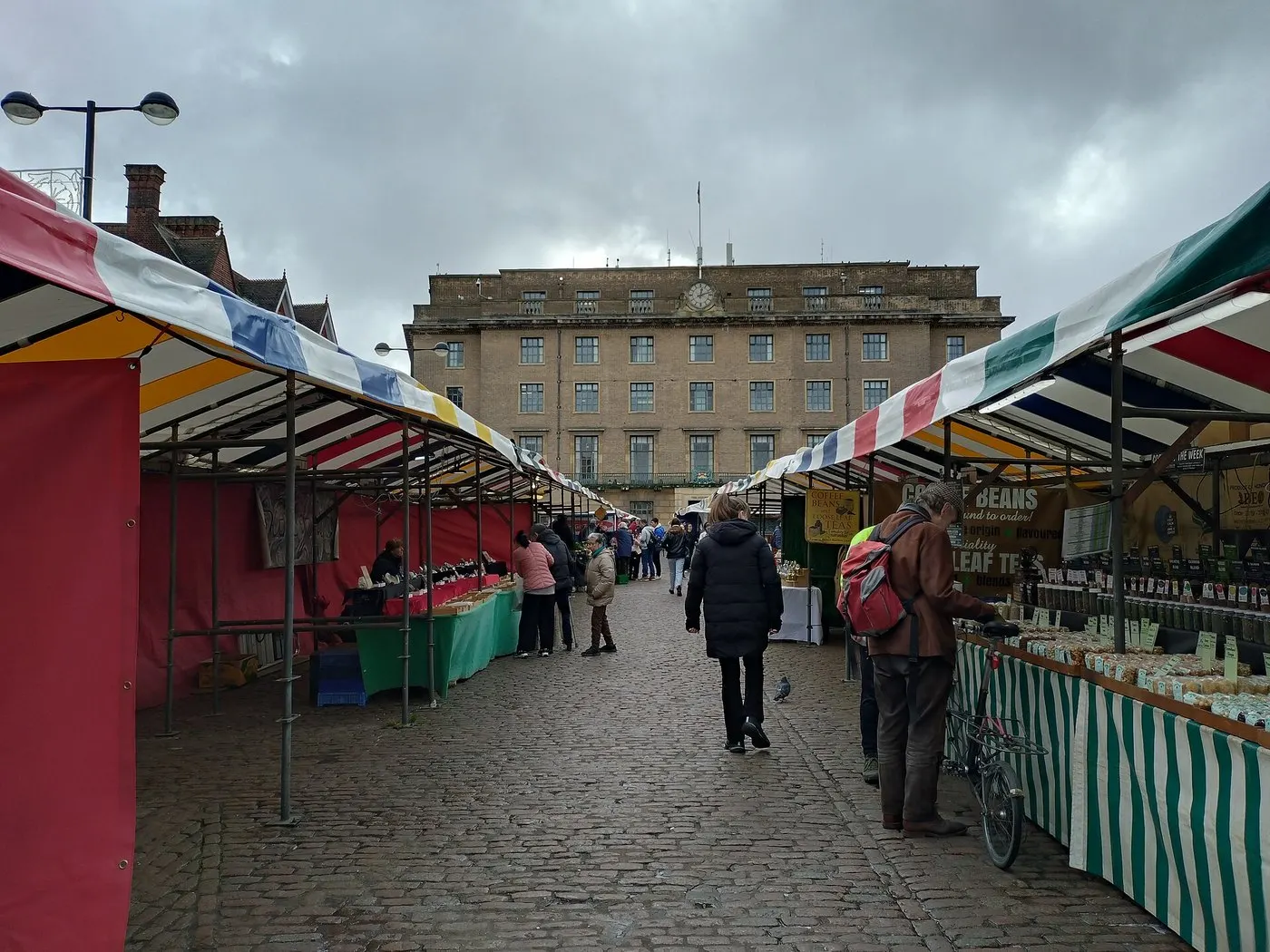
Around it, the centre divides into two kinds of business. There are the long-standing Cambridge institutions, some of which have been trading for a century or more, and there are the chains that any English city centre of this size carries. The institutions are generally on the side streets; the chains are on the main shopping routes. Walking one street off Sidney Street or St Andrew's Street changes what is available very quickly.
The constraint in the centre is physical. Most of it is listed, a great deal of it is medieval, and kitchens have to fit into rooms that were not built for them. That is why the best places to eat in the centre are often small, and why they fill.
Fitzbillies
51–53 Trumpington Street, Cambridge CB2 1RG
Station 1.6 km · Market Square 0.4 kmA bakery and café in the centre, with later shops on Bridge Street and King's Parade. Its own history puts the founding in 1920, by Ernest and Arthur Mason, on their demobilisation money from the First World War; the Chelsea buns date from then.
“Fitzbillies was founded in 1920 by Ernest and Arthur Mason, using their 'demob' money”
The Eagle
Bene't Street, Cambridge CB2 3QN
Station 1.7 km · Market Square 0.2 kmA city-centre pub a minute from King's Parade, on one of the oldest streets in Cambridge. It is a working pub, not a museum, and it is busy for that reason as much as for its history.
“the very pub in which Francis Crick and James Watson announced that they had discovered the DNA double-helix”
Mill Road
A mile east, Mill Road runs from the railway bridge towards the centre and carries more independent food businesses per yard than anywhere else in Cambridgeshire. The street has a long history of immigration, and its food reflects that directly, not decoratively: this is where the city's South Asian, Middle Eastern, East Asian, Caribbean and Eastern European kitchens are concentrated, alongside bakeries, delis and grocers supplying them.
The side streets count as part of it. Hot Numbers sits a minute off Mill Road on Gwydir Street, in the old Dales Brewery buildings, and is the clearest example of what the street does to a business: a coffee roastery that opened here rather than in the centre, and that people now cross the city for.
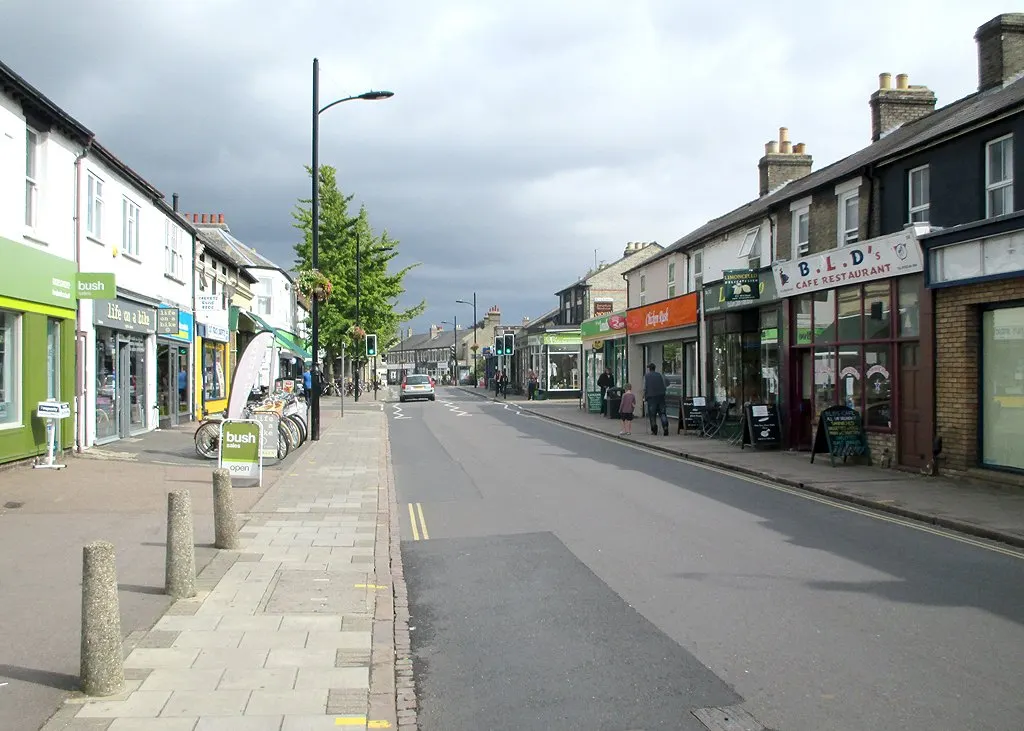
Mill Road is also where eating out in Cambridge is least expensive and least formal. Counter service is normal, bookings are often unnecessary, and a good share of the street is open later than the centre. If someone asks where to eat in Cambridge and has no other constraint, this is the honest answer.
Fin Boys
2 Mill Road, Cambridge CB1 2AD
Station 0.8 km · Market Square 1.1 kmFish at the bridge end of Mill Road, from a kitchen that also runs a fish butchery.
“the freshest fish from independent day boats … champions some of the more unusual, and most-sustainable catches”
Vanderlyle
38–40 Mill Road, Cambridge CB1 2AD
Station 0.8 km · Market Square 1.1 kmA small restaurant on Mill Road whose menus carry no meat or fish, at the higher end of what eating out in Cambridge costs.
“works directly with farmers, growers and producers to create ingredient-led menus that ebb and flow through the seasons”
Fancett's
96a Mill Road, Cambridge CB1 2BD
Station 0.6 km · Market Square 1.4 kmA small bistro halfway along Mill Road, with a short fixed menu.
“recommended in the Michelin Guide for 2026 and the Good Food Guide for 2025”
Scott's All Day
111–113 Mill Road, Cambridge CB1 2AZ
Station 0.6 km · Market Square 1.5 kmPizza, brunch and beer at the far end of Mill Road, beyond the railway bridge.
The station areas
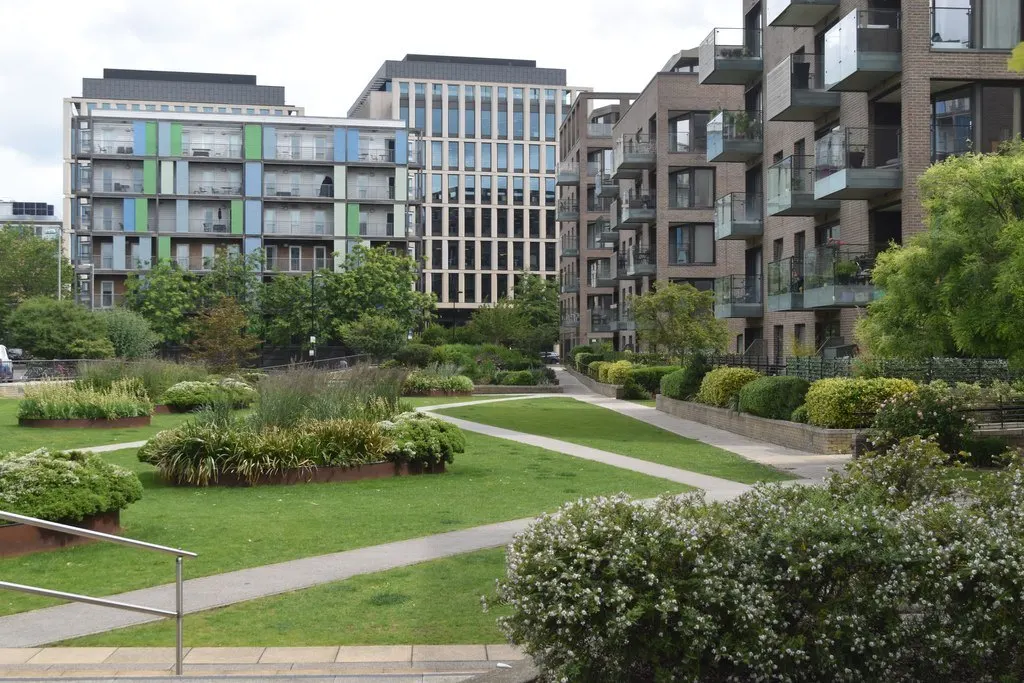
Cambridge has two stations now — the original one south-east of the centre and Cambridge North, opened in 2017, serving the science and business parks. The area around the main station was rebuilt wholesale in the 2010s as CB1, and the food there is largely what a new-build commercial development produces: reliable, mid-priced, open at predictable hours. That is genuinely useful if you have a train, and not a reason to walk over otherwise.
The Station Tavern
2 Station Square, Cambridge CB1 2GA
Station 0.1 km · Market Square 1.7 kmOn the square outside the main station, which is the whole argument for it: a pub, not a concourse chain, a minute from the platforms.
“a fresh, traditional British menu with a fully loaded modern bar featuring craft beers”
Castle Hill, Chesterton and the north
North of the river the city becomes residential quickly. The food follows: neighbourhood pubs, a scattering of small restaurants, and the kind of place that survives on people who live within ten minutes' walk. Chesterton Road and Mitcham's Corner carry most of it. These are among the best places to eat in Cambridge if you want a table on a Friday without having booked.
The Punter
3 Pound Hill, Cambridge CB3 0AE
Station 2.5 km · Market Square 0.8 kmA pub below Castle Hill, on the quiet side of the river from the colleges and close enough to walk back from.
The river and Grantchester
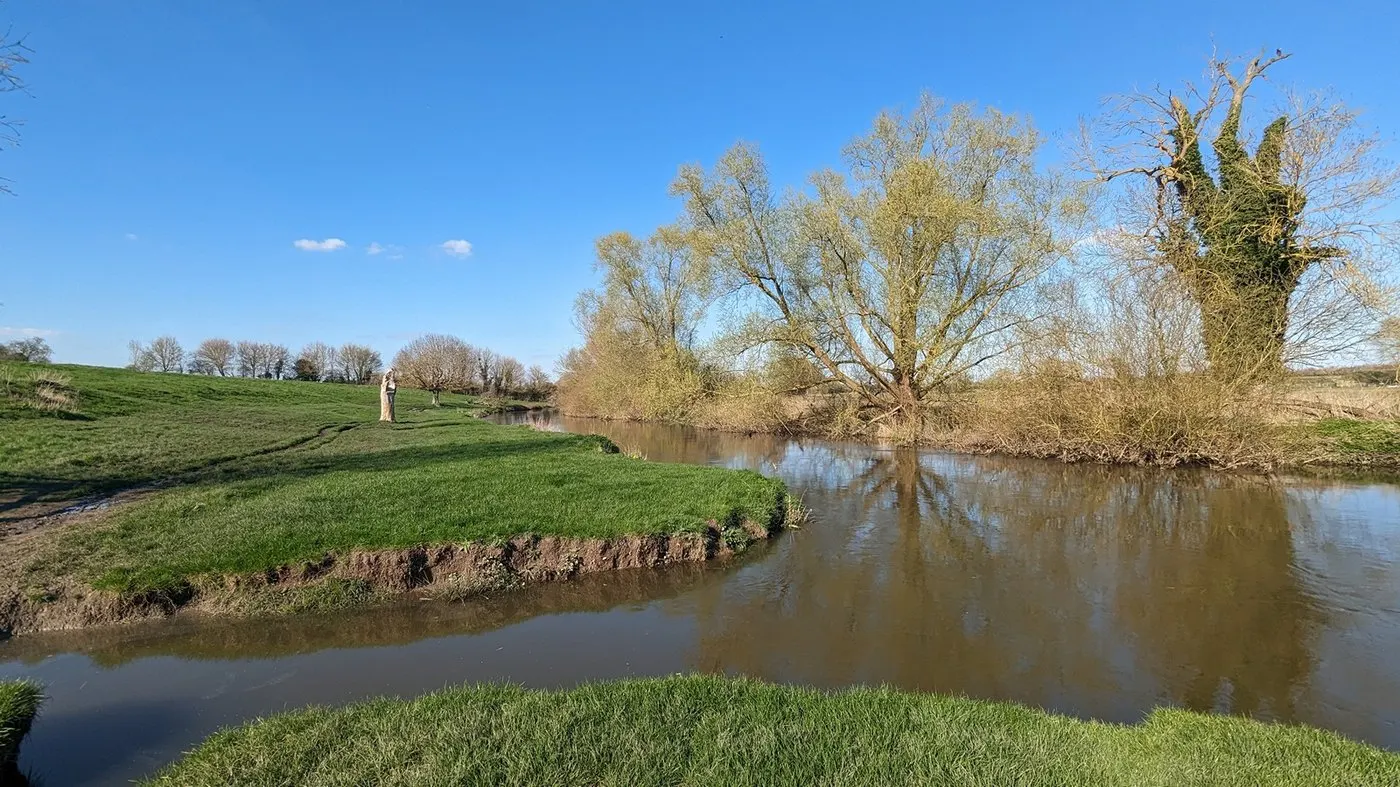
The river corridor is the one piece of Cambridge eating that genuinely requires a plan. The walk or punt upriver to Grantchester takes about an hour on foot through the meadows, and the village at the end of it has pubs and a tea garden that have been feeding people making that walk for well over a century. It is the only food in Cambridge where the journey is the larger part of the point.
The Orchard Tea Garden
47 Mill Way, Grantchester, Cambridge CB3 9ND
Station 3.4 km · Market Square 3.5 kmTea under the apple trees at the far end of the meadows walk, about an hour on foot from the city. It does not take bookings for brunch or lunch.
“warm inside seating for over 100 people in our The Rupert Brooke Room in our 100-year-old Pavilion”
The Red Lion
33 High Street, Grantchester, Cambridge CB3 9NF
Station 3.3 km · Market Square 3.4 kmA thatched village pub at the end of the same walk, for people who would rather finish with a meal than a scone.
“a quintessential British pub with a thatched roof, serving seasonal food, real ales”
Eating out in Cambridge by time of day
The second axis is the clock, and in a university city it matters more than it does elsewhere.
Early
Cambridge wakes early. The market traders, the college kitchens and the laboratories all start before the shops do, and a handful of cafés open to serve them. Before about nine the city is quiet and you can sit anywhere.
Lunch
Between twelve and two the centre is at its busiest, and the market is the fastest option by a wide margin. Bakeries sell their best things at lunchtime and frequently run out. This is also the window in which the city's better restaurants are most accessible, since many price a set lunch well below what they charge in the evening.
Evening
Cambridge eats early and stops early by the standards of a large city. Kitchens in the centre commonly take their last orders around nine, and on Sunday and Monday a significant number of independents simply close. Mill Road runs later than the centre, which is one more reason the street matters.
Late
There is not much, and what there is clusters near the centre's pubs and around Mill Road. This is a small city; planning around it is easier than fighting it.
The best places to eat in Cambridge depend on the term
Cambridge has roughly 25,000 students across two universities, and the undergraduate terms are short — three of eight weeks each. When they are in residence the city is fuller, noisier and harder to get a table in; when they are not, a noticeable share of the cheaper end quietens down and some of it closes.
The practical effect is that the same restaurant can be two different experiences six weeks apart. Mid-March, late June and most of the summer are the easiest times to eat well here without planning. The weeks around graduation and the start of Michaelmas are the hardest.
May Week — which, in the way of this city, happens in June — is the single busiest period of the year, and anything central is effectively booked out.
How to choose without a ranking
This guide publishes no scores, and that is deliberate. Hospitality turns over fast: a ranked list of the best places to eat in Cambridge is wrong within a year and actively misleading within two. What does not change as quickly is how the city is arranged, and that is what is worth knowing.
Three rules that hold. A place full of people who are clearly not visitors is a reliable signal in a tourist city. A short menu is usually a better sign than a long one, because a small Cambridge kitchen physically cannot hold the ingredients for forty dishes. And if a business has been on the same site for twenty years in a city with rents like this one's, it is doing something right.
Booking, prices and access
Book for the evening in the centre, especially Thursday to Saturday and during term. Lunch rarely needs it outside May Week. Many independents close one or two days a week, most often Sunday and Monday, and a few close for a fortnight in August.
Cambridge is expensive relative to the rest of the East of England and cheaper than London, which puts eating out roughly where you would expect for a prosperous English city. The market, Mill Road and the set lunches are where the value is.
On access: the historic centre is largely pedestrianised, which helps, but a great many of its buildings are old, narrow and stepped, and step-free access is genuinely patchy. It is worth asking before travelling instead of assuming.
What Cambridge is actually known for
Cambridge has no regional dish in the way that Melton Mowbray or Arbroath do, and claims to the contrary should be treated carefully. What it has instead are a few long-running institutions and one genuinely famous baked good.
The Chelsea bun as Cambridge makes it — a tight spiral, heavy on the syrup, studded with dried fruit — is associated above all with Fitzbillies on Trumpington Street, which has been baking on that site since 1920. It is the closest thing the city has to a signature, and it is worth noting that it is a London bun that Cambridge adopted and then became better known for.
Beyond that, the food identity here is agricultural, not culinary. Cambridgeshire is fen and arable country: grain, vegetables, orchard fruit at the edges, and some exceptional market-garden growing on the black soil north of the city. The best eating out in Cambridge tends to be the places that buy from within an hour's drive, and they will usually tell you so without being asked.
Can you eat inside the colleges?
Mostly not, and this is the most common misunderstanding visitors arrive with. College dining halls are private, run for members, and formal hall is a guest-list affair. A handful of colleges open a café or a garden to the public in summer, and some run occasional ticketed dinners, but there is no general right of entry and no college restaurant you can simply book.
What is open to anyone is the architecture: several colleges admit visitors to their courts and chapels for an entry fee during the day. That is a different outing from a meal, and the places to eat in Cambridge that sit nearest the college gates are, almost without exception, the ones charging the most for the least.
Shopping for food rather than eating out
A good part of eating well here is not eating out at all. The market sells produce six days a week. Mill Road carries grocers stocking ingredients that the supermarkets do not, and several of them are the reason a given restaurant three doors down can cook what it cooks. There are farm shops within a short drive on the Gog Magog hills to the south-east, where the chalk ridge gives Cambridgeshire the only hill worth the name for twenty miles.
For a city this size the delicatessen and bakery provision is unusually strong, which is a function of a population with money and a lot of people living in rooms without proper kitchens. Both groups buy prepared food, for different reasons.
Eating in Cambridge with dietary requirements
Better than average, and that is not a courtesy. A large student population, a large international population and two major hospitals mean vegetarian, vegan, halal and gluten-free provision is normal and not exceptional, particularly on Mill Road. Vegetarian cooking in Cambridge has a long history — there were meat-free restaurants in this city decades before it was commercially obvious — and the better places treat it as cooking rather than as a substitution exercise.
Allergen information is a legal requirement and every business should be able to give it. In small kitchens, cross-contamination risk is a real conversation worth having directly with whoever is cooking.
A short walking route for a first visit
If you have one day and want to understand where to eat in Cambridge rather than tick off a restaurant, walk it in this order. Start at Market Square mid-morning and look at what the food stalls are selling, because that tells you what is in season locally. Cross to Trumpington Street for a bun. Walk down to the river and along the Backs, which is free and is the view the city is famous for.
Then go east, out of the centre, to Mill Road, and have lunch there. The contrast between the two halves of that walk — the colleges and the street — is the single most useful thing a visitor can learn about this city's food, and it costs the price of a bus fare back.
Two cities in one, and it shows on the plate
Cambridge is not only a university town, and the parts of it that are not shape the food as much as the colleges do. There is a very large science and technology sector north and south of the city, there are two hospitals employing thousands, and there is an ordinary county town underneath all of it that was here first and will be here after.
Those populations eat at different times and in different places. The research parks generate weekday lunch demand a long way from the centre and almost none at the weekend. The hospitals run around the clock. The colleges empty for roughly half the year. A restaurant in this city is making a bet about which of those groups it is feeding, and once you can see the bet, the map of where to eat in Cambridge stops looking random.
It also explains the gaps. There is comparatively little late-night food for a place with this many young people, because the colleges feed their own and the city centre empties at closing time. And there are more good daytime cafés than an ordinary town of 150,000 could support, because a great many people here work somewhere they cannot cook.
Questions people ask
What are the best places to eat in Cambridge for a special occasion?
The centre holds most of the formal dining rooms, and they book up during term and in May Week. Lunch at the same restaurants is usually easier to get and considerably cheaper for the same kitchen.
Where should I eat in Cambridge on a Sunday or Monday?
A significant number of independents close on one or both of those days. Pubs and the Mill Road end of town are the safest bet, and the river walk to Grantchester is a Sunday institution precisely because the village pubs stay open when the centre does not.
Is eating out in Cambridge expensive?
Dearer than the rest of the East of England, cheaper than London. The market, Mill Road and set lunches are where the value sits, and none of the three is a compromise.
Do I need to book?
For dinner in the centre from Thursday to Saturday during term, yes. For lunch, rarely. During May Week in June, book anything central well ahead or plan to eat outside the middle of the city.
Can I eat in a Cambridge college?
Not as a rule. Dining halls are for members, and formal hall is by invitation. Some colleges open a summer café or run occasional ticketed dinners, but there is no college restaurant open for general booking.
Where to go next
If you are on a student budget, the student's guide to eating out in Cambridge covers the cheap end properly. For the market itself, see the Guildhall food and drink market. For drinking rather than eating, there is the drink guide, and for the rhythm of the year, what's on in Cambridge.