Street food in Cambridge
Cambridge has no street-food district. What it has instead is a market square that has traded for eight centuries, one long road of independent kitchens, and a handful of traders who move between college events, pub yards and seasonal nights. That is a different thing from a food-truck park, and it rewards knowing where to look.
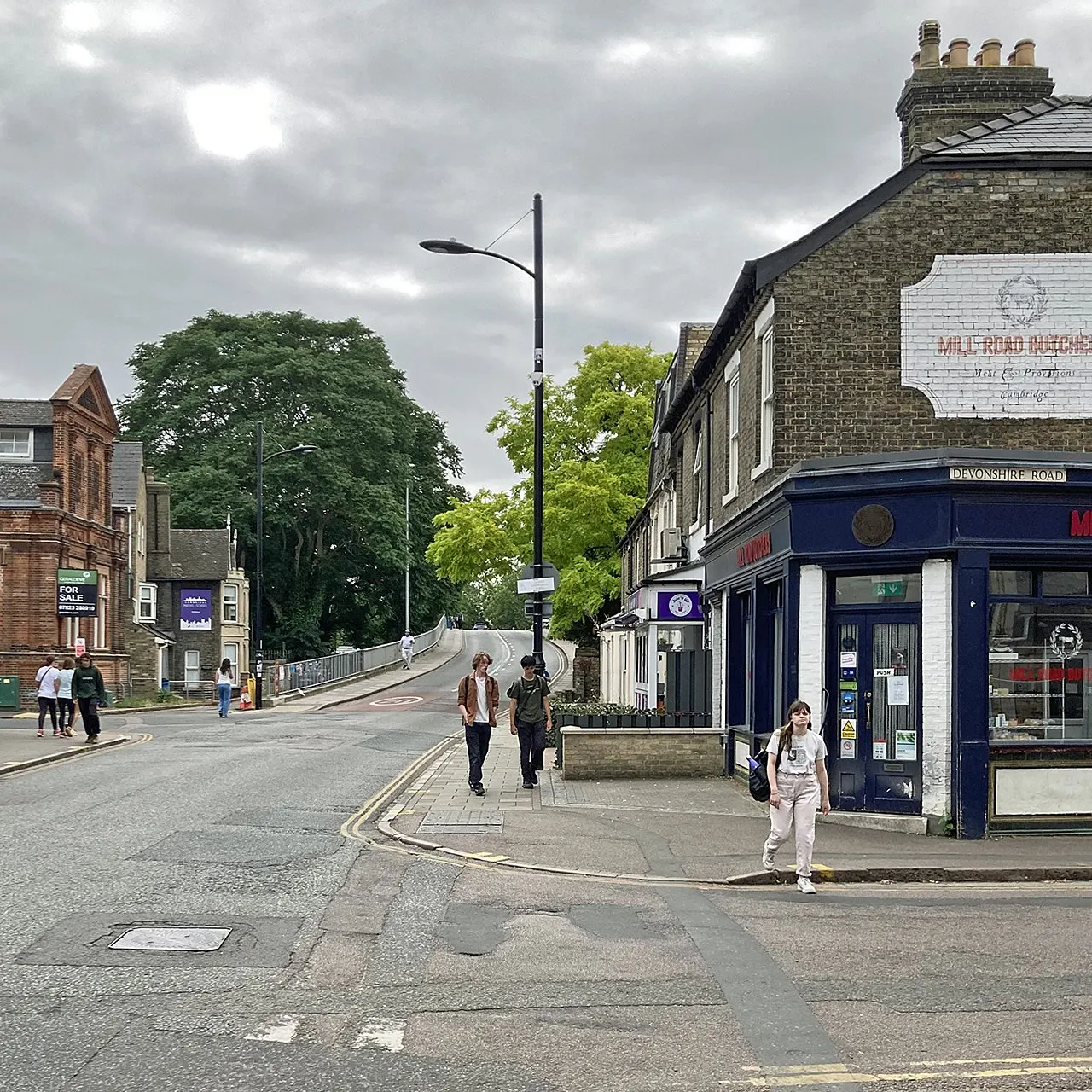
The market is the permanent answer
Market Square sits in the middle of the city, between the Guildhall and Great St Mary's, and the food stalls occupy one side of it. They trade seven days a week in the open air, which means the offer is weather-shaped and the queue moves fast at one o'clock and barely at all at eleven. This is the only reliable street food in Cambridge: everything else is seasonal, licensed for a particular event, or attached to a venue.
What distinguishes the market stalls from a high-street chain is not price — it is rarely cheaper — but that the person cooking usually owns the business. Trading from a stall in a conservation area carries real constraints on power, extraction and hours, and the traders who last are the ones who have built a dish around them.
That constraint shows up on the menu board. A stall with one fryer and a single hot surface cannot run fifteen dishes, so the ones that work run three or four and run them all day. A long menu on a small stall is usually a sign that most of it was cooked somewhere else and is being reheated, which is a different proposition and often a worse one. The narrowness is not a limitation the traders are apologising for; it is the thing that makes the food good.
It also explains why the square does not look like a food hall. A food hall is designed around a shared kitchen and shared seating, and it can carry a trader through a bad Tuesday. An open-air pitch cannot. Every stall on Market Square is a separate business carrying its own costs, which is why the mix changes slowly and why a stall that has been there for years is worth more of your attention than one that appeared last month.
Mill Road, the kitchen street
A mile east of the colleges, Mill Road runs from the railway bridge into the centre and carries more independent food businesses per yard than anywhere else in Cambridgeshire. Most of it is sit-down and not street food in the strict sense, but a good share of it is counter service, takeaway-first and open late — which is what people usually mean when they ask where to eat on the street here.
Mill Road is also where the city's food looks least like a university town and most like the rest of modern Britain. That is the point of it.
Gwydir Street, which runs off it beside the railway bridge, is where that shows most clearly. The old Dales Brewery buildings now hold small food businesses, among them Hot Numbers, which roasts its own coffee on the premises and opened on a side street off Mill Road instead of on a main road in the centre. The rent explains the decision; the queue explains why it worked.
The practical difference from the square is time of day. The market is a daytime thing and starts shutting down in the middle of the afternoon; Mill Road is at its best from early evening onwards, and a fair amount of it is still serving when the centre has gone quiet. If you want to eat something cooked to order after eight o'clock without booking a table, this is the street, and the walk out from the centre takes about twenty minutes.
Night markets and one-off trading
Cambridge runs periodic evening markets on the square, and colleges, breweries and pub yards host traders for single nights through the warmer months. These are announced rather than permanent, and the line-up changes every time. The pattern is familiar from other British cities, where a travelling trader can build a following across several venues before taking a fixed site — the same route taken by operations such as carnival street food and bar, which built a following from vans before a venue.
What it takes to trade on a street
Street trading in England is not a free-for-all and it is not a single national licence either. Councils take the power to regulate it by adopting Schedule 4 of the Local Government (Miscellaneous Provisions) Act 1982, and once they have, they designate individual streets: a consent street, where you may trade only with the council's consent, or a prohibited street, where you may not trade at all. The practical effect is that permission attaches to a particular piece of pavement rather than to the trader, which is why a van that trades happily in one town can be turned away a few miles down the road.
On top of that sits food law, which is national and applies to a van exactly as it applies to a restaurant. A food business has to be registered with the local authority at least 28 days before it starts trading. Registration is free and cannot be refused, which surprises people who assume it is the hard part — it is not a licence, it is a notice that tells the council you exist so they can inspect you. A mobile business registers with the authority where the vehicle is normally kept overnight, not with every council it drives through.
The inspection that follows produces the food hygiene rating, and here England differs from the rest of the United Kingdom in a way worth knowing about. Display of the rating has been compulsory in Wales since November 2013 and in Northern Ireland since October 2016. In England it is voluntary: a business is encouraged to show its sticker and is not obliged to. A Food Standards Agency audit in 2022 found roughly two-thirds of English businesses displaying, against about nine in ten in Wales and Northern Ireland.
So the absence of a green sticker on a Cambridge stall tells you nothing on its own. The rating still exists — every registered food business has one — and it is published, so it can be looked up before you go. That is a more useful habit here than anywhere that makes the sticker compulsory, precisely because the sticker is the thing England left optional.
What street food costs a small city
Street trading looks informal and is not. A pitch needs a licence, a food hygiene rating, waste arrangements and, in a city centre full of listed buildings, agreement about where the smell and the noise go. Cambridge is small, dense and heavily protected, so the number of pitches it can support is genuinely limited. That is why the scene here is narrow and why the traders who hold a pitch tend to keep it for years.
The upside for anyone eating is consistency. A trader who has held the same spot for five years is not experimenting with your lunch.
The square itself is due to change. Planning permission for a rebuild of Market Square was granted in September 2026, and the council's stated intention is to keep the market trading throughout the work, in the surrounding streets if necessary. Anyone who has watched a market move knows that a temporary pitch is not the same business as a permanent one, so the mix of traders through that period is worth treating as unsettled rather than as the usual offer.
Reading a stall you have never seen before
The ordinary advice — follow the queue — is only half right in a city with this many visitors. A queue on Market Square at noon on a Saturday can be entirely people who have never been before and are queuing at the first stall they saw. The queue that means something is the weekday one made of people who work nearby, and it is recognisable because it moves: the order is already known before anyone reaches the front.
Two other signals are more reliable than the crowd. The first is whether the person cooking is also the person taking the money, which on a small stall usually means you are dealing with the owner. The second is whether the food is being finished in front of you or lifted out of a tray. Neither is a judgement about quality on its own — a tray of slow-cooked something is exactly right for some dishes — but together they tell you what kind of operation you have walked up to.
What is not a signal is price. Market food in Cambridge is not systematically cheaper than a café, and a stall charging less than everything around it is usually buying cheaper rather than running leaner.
Weather is the whole variable
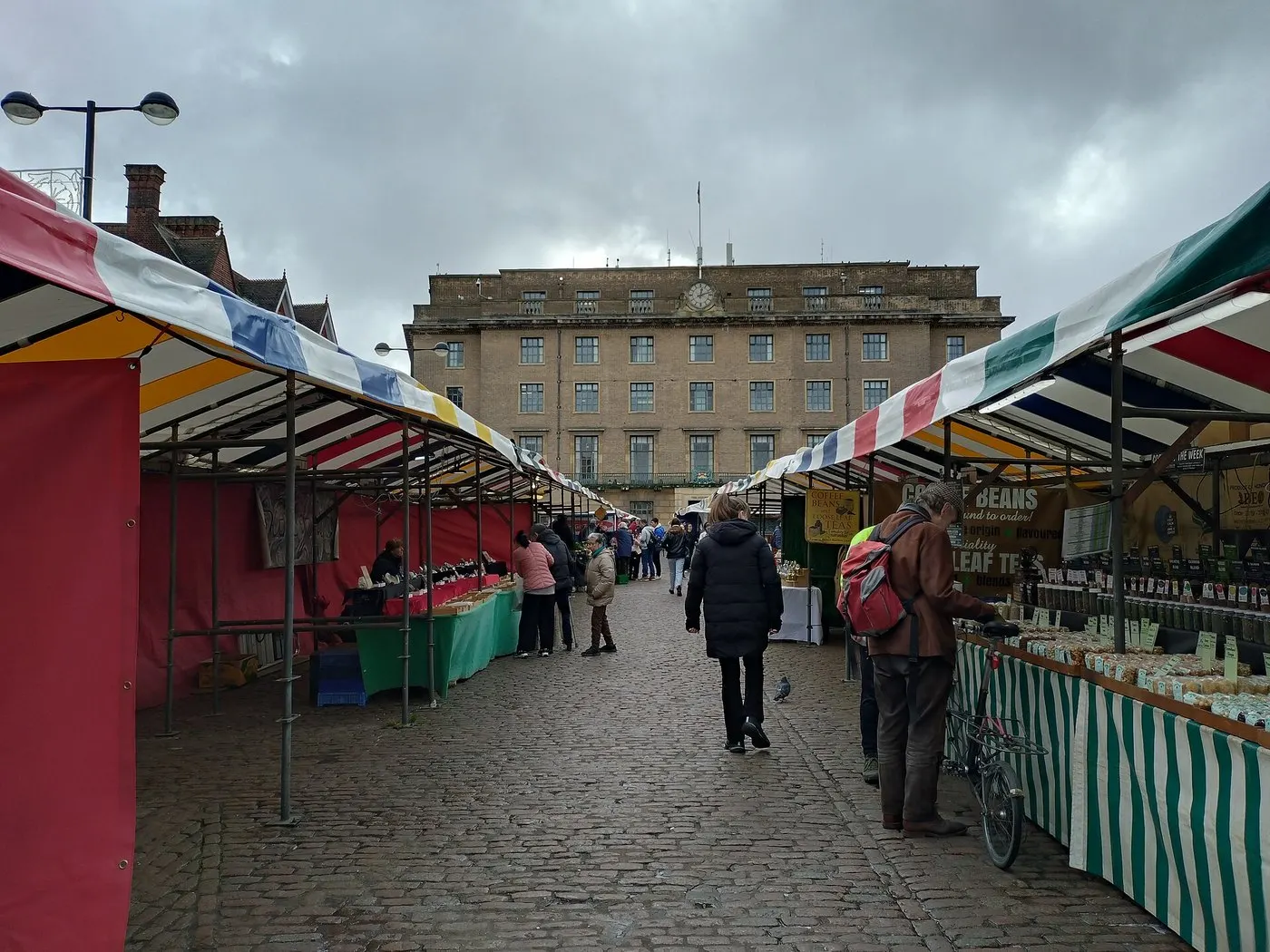
An open-air stall has no bad-weather plan beyond a canopy, and an afternoon of steady rain on a Tuesday in February empties the square faster than anything else. Traders know it, which is why the number of hot-food stalls genuinely rises and falls with the forecast. For anyone eating, that cuts both ways: a dry lunchtime in the middle of the week is the best the market gets, and a wet one is the moment to take the food indoors and accept that the choice is narrower than usual.
It is also why Cambridge has never developed the year-round evening street-food scene that cities with covered sites have. A permanent roof changes the economics of the whole thing, and the square does not have one.
Eating outside without a stall
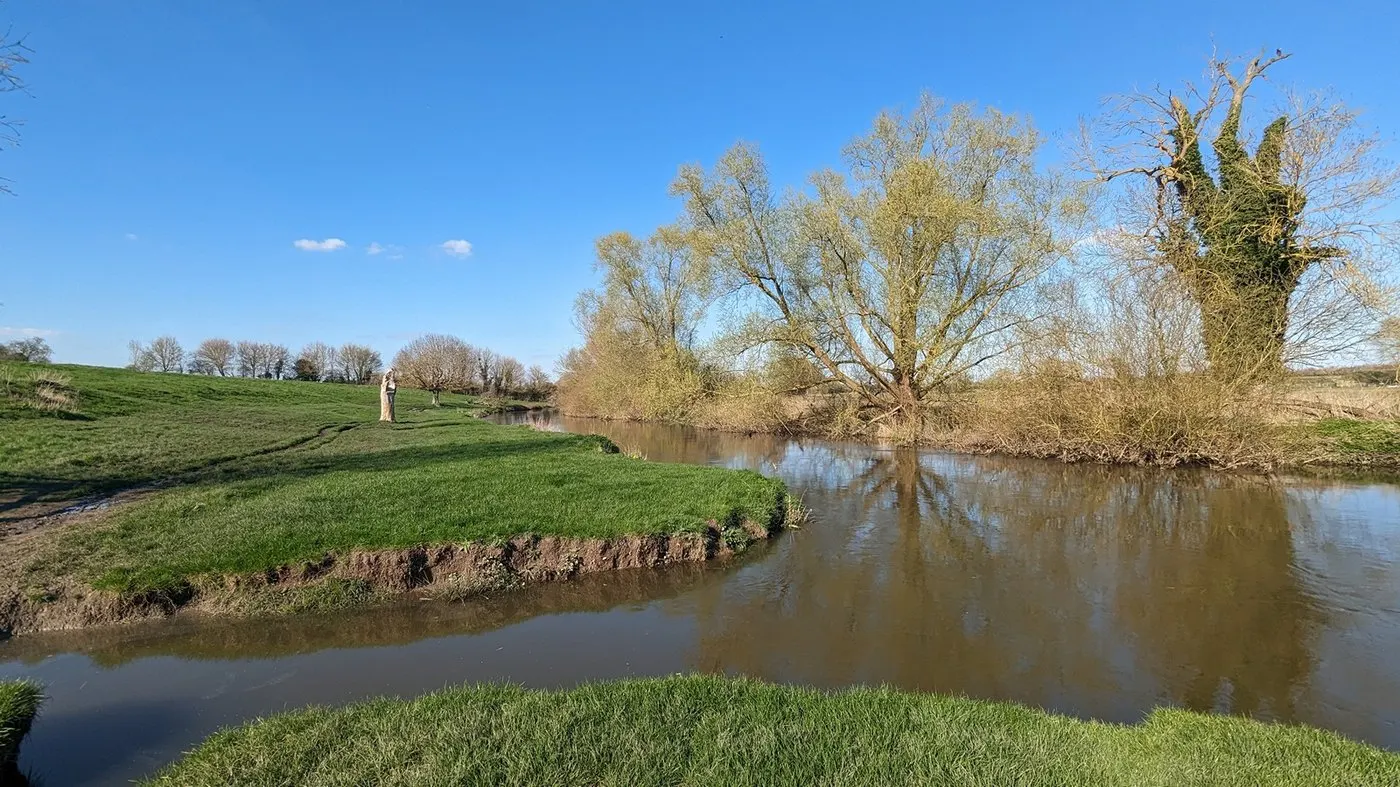
A good deal of Cambridge's outdoor eating is bought indoors and carried out. Bakeries and delis sell for exactly that, and the city is unusually well supplied with places to sit: Parker's Piece, Jesus Green, the Backs where they are open to the public, and the long stretch of river path towards Grantchester. On a dry day this is the best food value in the city, and it costs nothing to use.
The geography helps more than it does in most cities. Cambridge is small enough that the green space is never far from the food — Parker's Piece is a few minutes from the market, Jesus Green a few minutes the other way — so the gap between buying and sitting down is short enough that hot food is still hot. That is not true in a city where the nearest park is a bus ride, and it is a large part of why the takeaway-and-walk habit is so entrenched here.
The colleges are the exception to all of this. Much of the most attractive ground in the centre belongs to them, it is not public, and the parts open to visitors have their own rules about food. Treating a college lawn as a picnic site is a reliable way to be asked to leave.
What Cambridge does not have
It is worth being clear about the gap, because visitors arrive expecting something that is not here. There is no permanent food-truck park, no converted warehouse full of traders, no shipping-container yard. Cities that have those tend to have a piece of cheap, underused land near the centre and a council willing to see it used that way for a few years. Cambridge has very little land of that description: the centre is small, protected and expensive, and what is not college-owned is mostly already built on.
The result is a scene that is narrow, old and reliable, not wide and fashionable. One market that has traded for centuries, one long street of independent kitchens, and a handful of traders who appear for an evening and move on. Knowing that in advance turns a disappointment into a plan.