Denmark's food festivals
Denmark is a small country that spent two decades deliberately rebuilding its reputation for food, and its festivals carry the marks of that project: they are organised, they are regional, and they argue a case about ingredients instead of simply selling them.
Copenhagen Cooking
The capital's festival was established in 2004 by Wonderful Copenhagen, the city's own tourism organisation, and has run in August ever since. In 2016 it joined forces with the Food Organisation of Denmark and took the name it carries now, Copenhagen Cooking & Food Festival. The two halves of that history explain the shape of it: a destination body wanting visitors in a quiet month, and a trade body wanting a platform for Danish producers.
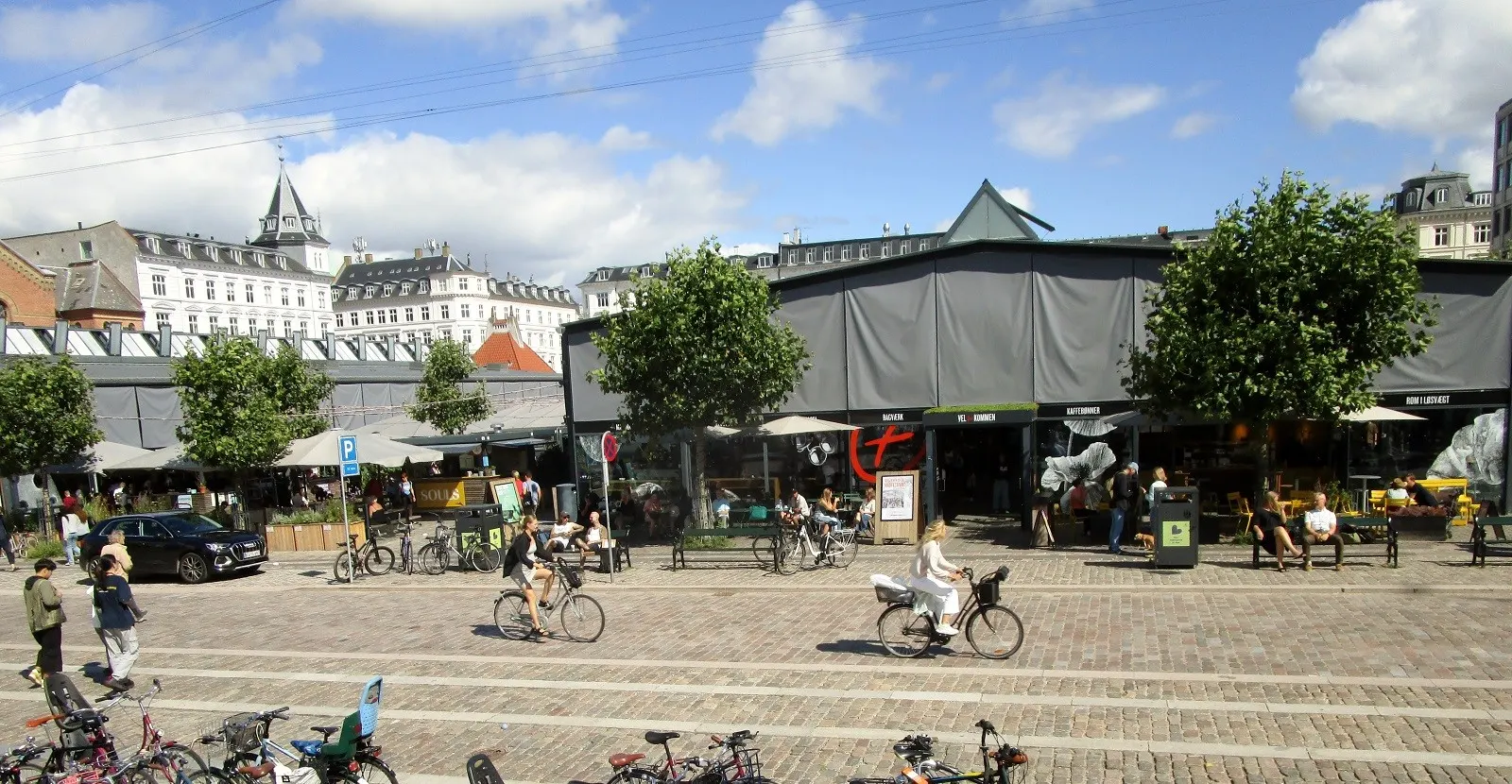
It works as a citywide programme, not a single site — restaurants, harbour events, markets and talks held under one banner over a stretch of days. There is no festival field, no ticketed entrance to a perimeter, and no single car park. Events happen in the places that already cook, which keeps the overheads down and means a bad year costs the city a programme and not an infrastructure.
That model has a cost worth naming. A citywide programme is hard to see if you do not already know it is happening: there is no skyline of marquees to walk towards. It works in Copenhagen because the restaurant trade is dense enough that a visitor trips over it, and it transfers badly to a city where the good kitchens are scattered.
The 2016 merger is the part most often skipped over, and it matters. A tourism organisation measures a festival in visitor nights; a food trade body measures it in producers who sold something. Putting both in charge of the same programme forces the question that volunteer committees usually have to answer alone — who is this actually for — and answers it with two institutions that have to live with the result.
Why the Nordic context matters
The New Nordic Kitchen Manifesto was formulated at a Nordic kitchen symposium in November 2004, after the food entrepreneur Claus Meyer circulated a document of ten suggestions to leading chefs across the region. Its ten points deal with purity, season, ethics, health, sustainability and quality, and together they commit the signatories to regional ingredients and to a rejection of imported luxury as the marker of a serious kitchen.
What makes it unusual is not the document but what happened to it. In 2005 the Nordic Council of Ministers adopted the manifesto as the ideology of its New Nordic Food programme, and national development programmes were built behind it. A chefs' statement became policy with money attached. Most food festivals have a theme; these had a position, and the position had a budget.
The practical effect is visible at the stalls. A Danish festival will often foreground a producer rather than a chef, and will explain where something came from without being asked. The grower is not a supplier credited in small print at the back of the programme; the grower is frequently the person standing behind the table.
It is worth being sceptical about the scale of that achievement. Twenty years of state-backed promotion buys a reputation, and a reputation is not the same as a food culture. But the test of the manifesto is not whether every Dane eats differently — it is whether a small country with a short growing season and no tradition of culinary prestige could build an export identity out of what it actually grows. On that question the answer is plainly yes, and that is the part a British organiser should be looking at.
Beyond Copenhagen
Aarhus, Denmark's second city, holds the country's largest food festival on the Tangkrogen waterfront in early September, drawing crowds in the tens of thousands across a site split into themed areas. The city held the title of European Region of Gastronomy in 2017, and the festival carries the marks of a programme built to be looked at by other regions: organised, sectioned, and explicitly about Nordic food, not about Aarhus alone.
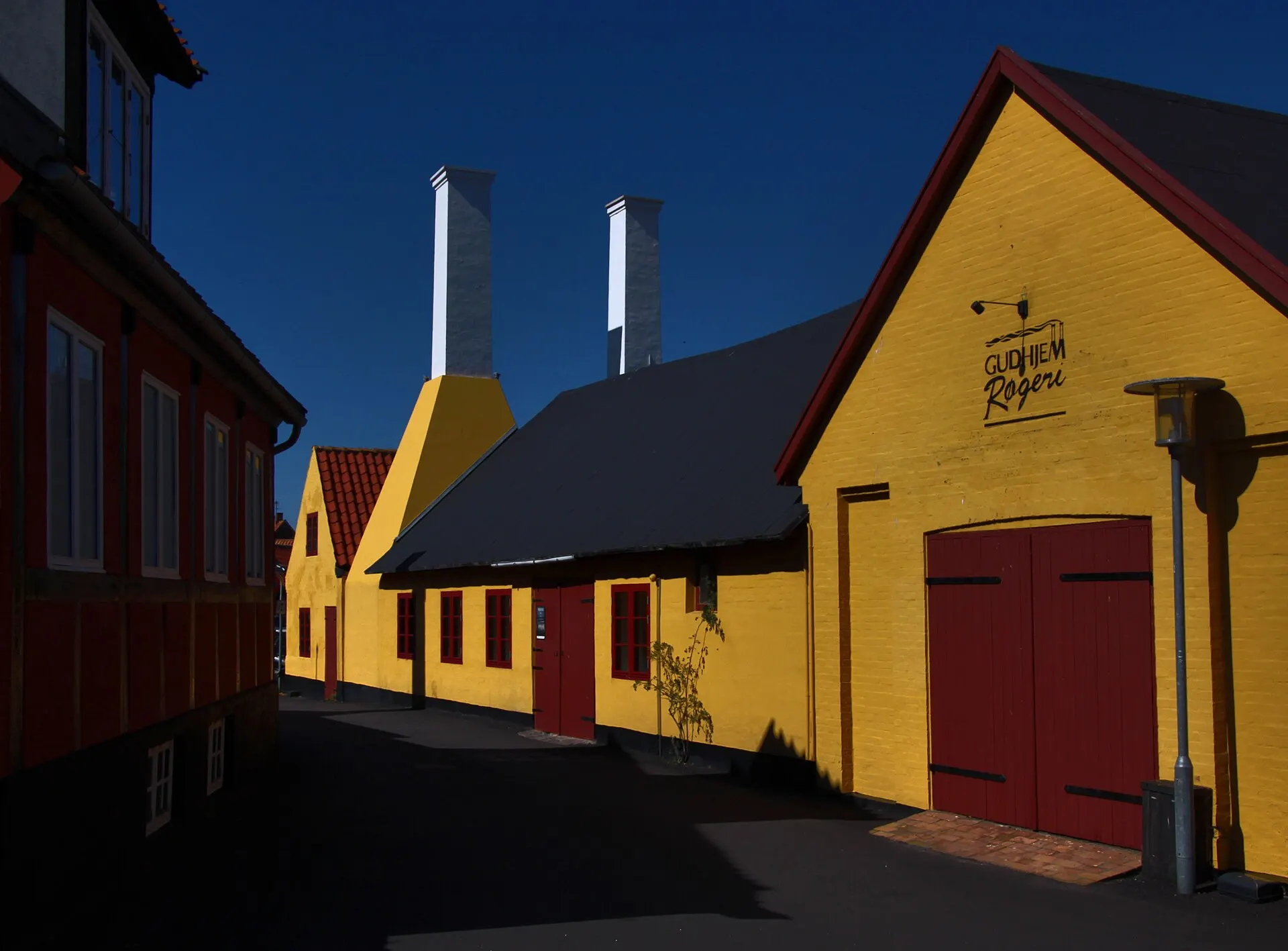
Bornholm is the opposite case and the more interesting one. The island sits a long way east in the Baltic, closer to Sweden than to Copenhagen, and its food identity rests on smoking. A century ago herring smoking was the backbone of the island's economy; Gudhjem had so many smokehouse chimneys that it was known as the town with a hundred of them. Much of the herring smoked there now comes from elsewhere in the Baltic, which is an honest illustration of what happens to a single-product food identity when the product moves.
What Bornholm did with that inheritance is instructive. Rather than preserving the smokehouses as a heritage attraction, the island built a contemporary food economy on top of them — including Kadeau, its Michelin-starred restaurant — and runs its main food event, Sol over Gudhjem, in June around a cooking competition. The smokehouse is the origin story, not the product on sale.
Around the Baltic
The same pattern repeats around the Baltic coast, where the shared ingredient is fish. The Helsinki Baltic Herring Market is the best-known and the oldest: it has been held since 1743, which makes it one of the longest-running public events in Finland. It opens on the first Sunday of October on the Market Square by the harbour and runs through the following Saturday, with fishing families selling from the quay, and it is organised by the Helsinki Events Foundation, not by a trade body.
It is a market first and a festival second, and it is the better for it. Attendance runs in the tens of thousands — around 80,000 one recent year, about 65,000 the next when an autumn storm forced it to close temporarily, which is the kind of detail that tells you it is held outdoors on a quay in October rather than in a hall.
It also demonstrates the risk in building an event on one species. Organisers have publicly noted the shadow cast over the market by proposed European restrictions on Baltic herring fishing. A festival named after a fish is hostage to the fish, and no amount of programming fixes a stock that is not there.
The calendar is part of the argument
Line the Nordic events up by date and a pattern appears that has nothing to do with programming. Bornholm holds its main food event in June, Copenhagen runs through August, Aarhus takes the first weekend of September, and Helsinki sells herring off the quay in the first week of October. Four events, four months, and not one of them in the middle of summer.
That is the growing season talking. In a region where the useful agricultural year is short and the autumn catch is the one that matters, a festival built around what is actually available cannot float to the warmest weekend of the year — it has to sit where the food is. A midsummer event in Scandinavia is a midsummer event; it is not a harvest.
British festivals have the opposite problem and rarely admit it. The weather pushes everything towards July and August, the growing season allows a much wider window, and the result is a calendar clustered for the organisers' convenience and not the produce's. An event that genuinely wanted to be about local ingredients in eastern England would sit in September, when the arable harvest is in and the orchards are going, and would accept a colder weekend as the price of having something to sell.
What a British organiser can take from it
Two things, and neither of them requires a manifesto. The Danish events generally run at a scale their cities can absorb, and they name their producers. Both are the difference between a festival that builds a local food economy and one that imports caterers for a weekend.
The scale point is the harder of the two to hold. A festival that grows faster than its city's kitchens, accommodation and transport can carry ends up buying in traders from elsewhere to fill the gap, and at that moment it stops being about the place it is named after. Copenhagen Cooking avoided that by never having a site to fill. The volunteer-run British festivals that lasted did the same thing by accident, because they had no capital to build one.
The naming point is cheaper than it sounds. Putting a grower's name on a stall sign costs nothing, and it changes what the visitor takes away: a supplier relationship instead of a pleasant afternoon. It is also the only part of the Nordic programme that can be copied without state funding, which is why it is the part worth copying.
The third lesson is the one the Danish events do not teach, because they have never needed to learn it: what happens when the money stops. A programme underwritten by a tourism body or a council survives a bad year. A volunteer committee does not, and the British festival landscape is full of events that ran brilliantly for five or six years and then simply did not return. That is not a failure of programming. It is what happens when an event's whole capacity sits in the free time of a dozen people.